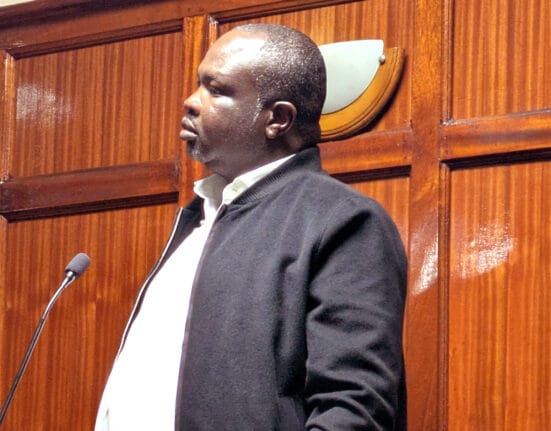

Key Details of the DTB Capital Centre Fraud Case
| Case Detail | Information |
|---|---|
| Suspects | Ajip Haisam Majid & Ali Samir Abdalla |
| Primary Allegation | Currency substitution fraud (USD 2,900) |
| Key Locations | DTB Capital Centre, Nyali & Likoni Branches |
| Date of Arrest | 4th February 2026 |
| Place of Arrest | Jomo Kenyatta International Airport (JKIA) |
| Presiding Magistrate | Chief Magistrate Lukas Onyina |
| Current Status | 5-day custodial detention for investigations |
The arrest of Ajip Haisam Majid and Ali Samir Abdalla at Jomo Kenyatta International Airport (JKIA) on February 4, 2026, has sent ripples through Kenya’s banking sector. The two suspects were intercepted under an active stop order linked to ongoing investigations into a DTB Capital Centre fraud case involving USD 2,900 and alleged attempted fraudulent withdrawals at DTB Nyali and Likoni branches.
Ajip Haisam Majid and Ali Samir Abdalla Arrest Details at JKIA
On February 4, 2026, Ajip Haisam Majid and Ali Samir Abdalla were intercepted at Jomo Kenyatta International Airport under an active stop order issued amid escalating fraud investigations. This was not a routine security detention. It followed investigative intelligence connecting the suspects to alleged fraudulent withdrawals at DTB Bank branches across Kenya.
Airport arrests carry weight. They signal urgency and calculated timing. Prosecutors later informed the court that the interception reinforced concerns that the suspects might exit the jurisdiction before investigations were complete. Under Kenyan criminal procedure, a stop order functions as a preventive legal mechanism, restricting travel where authorities believe departure could obstruct justice or compromise ongoing inquiries.
In this case, investigators acted before international departure formalities could complicate the matter. The intervention at JKIA was strategic. It demonstrated that authorities viewed the DTB Bank fraud investigation as sufficiently serious to warrant immediate action at Kenya’s primary international gateway.
The interception shaped the trajectory of the case. From that moment, the legal narrative shifted from suspicion to formal court proceedings.

Court Proceedings Before Chief Magistrate Lukas Onyina
When the suspects were arraigned before Chief Magistrate Lukas Onyina, the prosecution did not immediately file substantive charges. Instead, it presented a miscellaneous application seeking five days of custodial detention to complete investigations into the alleged DTB Capital Centre fraud.
Inspector Ali Nura submitted a sworn affidavit outlining the investigative framework. The court heard that on November 30, 2024, two women accompanied by a man allegedly executed a currency substitution fraud at DTB Capital Centre, resulting in a loss of USD 2,900.
The prosecution further submitted that CCTV footage analysis placed the same individuals, allegedly alongside Majid and Abdalla, at DTB Nyali and Likoni branches in January 2025, where similar fraudulent attempts were reportedly made.
The State described a pattern rather than an isolated occurrence. That distinction carries legal weight. A recurring scheme potentially elevates the matter beyond a single transactional offense and into the realm of coordinated financial crime.
The five-day detention request was framed as an investigative necessity, not a punitive action. The magistrate was therefore tasked with balancing constitutional liberty against the integrity of ongoing financial crime investigations.
DTB Capital Centre Fraud Case: Understanding the Currency Substitution Allegations
The core allegation centres on a currency substitution scheme. According to court submissions, the November 2024 incident at DTB Capital Centre involved the presentation of legitimate currency during a transaction, followed by a subtle switch that allegedly created a discrepancy allowing unlawful withdrawal.
Currency substitution fraud relies on timing and distraction. It exploits the human element in banking transactions. Investigators claim that this method resulted in the unlawful loss of USD 2,900 and that similar tactics were attempted at DTB Nyali and Likoni branches weeks later.
If proven, such repetition would indicate structured coordination rather than coincidence. Prosecutors appear to be constructing a narrative of continuity, linking multiple branches and dates under a single investigative umbrella.
Financial institutions across Kenya have strengthened surveillance systems precisely to detect these types of schemes. In this case, CCTV footage reportedly forms a central evidentiary pillar, potentially connecting the suspects to the broader alleged pattern of activity.
The legal outcome will depend on whether the prosecution can demonstrate not only presence at the branches but also participation in a deliberate and coordinated fraudulent enterprise.
Active Warrants and the Prosecution’s Flight Risk Argument
A significant element in the prosecution’s argument involved the disclosure of active warrants of arrest against Ajip Haisam Majid in relation to similar alleged matters. This history became central to opposing immediate bond release.
Under Kenyan bail jurisprudence, courts evaluate several factors when determining release conditions:
The seriousness of the allegations
The strength of the prosecution’s preliminary evidence
Prior criminal record or outstanding warrants
Likelihood of interfering with witnesses
Risk of absconding
Prosecutors argued that the airport interception itself demonstrated credible flight risk. They maintained that premature release could jeopardise the ongoing analysis of surveillance footage, transaction logs, and witness statements.
“The respondents are a flight risk,” the prosecution submitted, emphasising the prior airport interception and the need to preserve investigative integrity.
The magistrate’s interim ruling allowing detention for five days reflected the court’s acceptance that investigators required limited custodial time to consolidate evidence.
Why This DTB Bank Fraud Case Matters Under Kenyan Law
The case involving Ajip Haisam Majid and Ali Samir Abdalla extends beyond individual allegations. It intersects with broader legal frameworks governing financial crimes in Kenya.
Currency substitution and fraudulent withdrawal schemes may attract charges under provisions of the Kenyan Penal Code relating to stealing, obtaining by false pretenses, or conspiracy to commit a felony, depending on prosecutorial direction. Additionally, where coordinated activity across branches is alleged, investigators may consider statutory provisions addressing organized financial crime.
The use of a miscellaneous detention application is grounded in the Criminal Procedure Code, which allows temporary custodial orders where investigators demonstrate reasonable grounds that release could hinder ongoing enquiries.
Such procedural steps are increasingly common in complex financial cases involving digital evidence, surveillance analysis, and multi-location investigations. The court must ensure that constitutional safeguards are respected while enabling law enforcement to complete necessary forensic review.
This balance between liberty and investigation defines the early stage of many financial crime proceedings.
Impact on DTB Bank and Kenya’s Banking Sector
Allegations of fraudulent withdrawals at DTB Capital Centre, Nyali, and Likoni branches highlight vulnerabilities that financial institutions continuously strive to address.
Banks operate on trust. Every transaction depends on layered verification systems, trained personnel, and digital monitoring. A coordinated scheme targeting multiple branches underscores the evolving sophistication of financial fraud tactics.
For customers, such cases raise questions about security protocols. For banks, they reinforce the necessity of:
Continuous staff training on fraud detection
Enhanced transaction verification procedures
Real-time surveillance monitoring
Coordinated branch communication systems
While investigations remain ongoing, the case serves as a reminder that financial crime prevention requires both technological safeguards and vigilant human oversight.
What Happens Next in the Ajip Haisam Majid and Ali Samir Abdalla Case
The five-day custodial detention period allows investigators to finalise evidence analysis. Potential next steps may include:
Formal charging under relevant Penal Code provisions
Bail hearing determinations
Disclosure of CCTV and transactional evidence
Witness statement consolidation
The defence is expected to challenge evidentiary linkage, procedural compliance, and characterisation of flight risk. Ultimately, trial proceedings will determine factual findings based on admissible evidence.
At this stage, the case remains in its investigative phase. However, the interception at JKIA, the allegations of coordinated fraudulent withdrawals, and the legal arguments presented before Chief Magistrate Lukas Onyina have already positioned the DTB Bank fraud case as one of notable public and legal interest.
The matter now progresses from preliminary detention to evidentiary scrutiny, where allegations will be tested within the structured safeguards of Kenya’s judicial system.